BbQ-ExPat
Bright but Quantum - Experimental Pathways to Generate and Characterize Non-Gaussianity in Intense Light
Context
The understanding and development of quantum physics has led to a wide range of technologies, which are now found in nearly every device we use, such as transistors, semiconductors and lasers. While quantum physics is essential for explaining how a laser works, the light it emits can be described using classical wave theory. The phase-space representation of such a coherent state, called the Wigner quasiprobability distribution, exhibits a thin, symmetric Gaussian shape that saturates the Heisenberg uncertainty principle. In this sense, lasers are considered the boundary between the classical and the quantum worlds.
The width of coherent states can be squeezed along one quadrature, yielding a “quantum advantage” along the squeezed direction [1]. The generation of squeezed states has become a standard technique, and they are now used to enhance the sensitivity of gravitational wave interferometers [2] and microscopes [3]. However, these states still possess a Gaussian and positive Wigner function, whereas a negative, non-Gaussian Wigner function is required for universal quantum computation [4]. Non-Gaussian states also offer a quantum advantage [5], which becomes more pronounced as the average photon number increases [6]. The ability to generate on-demand Wigner-negative large non-Gaussian states of light is therefore one of the key challenges in quantum optics and quantum-based emerging technologies [7,8].

Project
This project builds upon the recent theoretical work [5] of [Phys. Rev. Res. 5, 013165 (2023)], which have studied the evolution of a coherent state under a Hamiltonian nonlinear in the atom-number operator. They have discussed the appearance of strong quantum features such as negativity and large quantum Fisher information event though the state conserve its poissonian statistics i.e. the quantumness of the state cannot be probed looking at its particle probability distribution. Because of its poissonian statistics, the state remain coherent to all order in the sense of Glauber and is thus termed Generalized Coherent State. We propose to study and generate these state experimentally.
Results
-
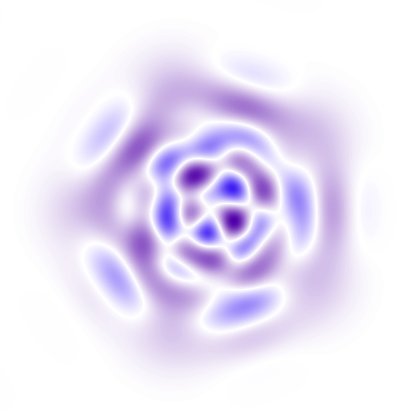
Characterization of Generalized Coherent States through Intensity-Field Correlations
We show that a simple and experimentally accessible observable, the intensity-field correlation function alone, provides a witness of nonclassicality for Generalized Coherent States.
Bibliography
[1] V. Giovannetti, S. Lloyd, and L. Maccone, Quantum-Enhanced Measurements: Beating the Standard Quantum Limit, Science 306, 1330 (2004).
[2] J. Aasi et al., Enhanced sensitivity of the LIGO gravitational wave detector by using squeezed states of light, Nat. Photonics 7, 613 (2013).
[3] Z. He, Y. Zhang, X. Tong, L. Li, and L. V. Wang, Quantum microscopy of cells at the Heisenberg limit, Nat. Commun. 14, 2441 (2023).
[4] M. Walschaers, Non-Gaussian Quantum States and Where to Find Them, PRX Quantum 2, 030204 (2021).
[5] M. Uria, A. Maldonado-Trapp, C. Hermann-Avigliano, and P. Solano, Emergence of non-Gaussian coherent states through nonlinear interactions, Phys. Rev. Res. 5, 013165 (2023).
[6] X. Deng et al., Quantum-enhanced metrology with large Fock states, Nat. Phys. 20, 1874 (2024).
[7] A. I. Lvovsky, P. Grangier, A. Ourjoumtsev, V. Parigi, M. Sasaki, and R. Tualle-Brouri, Production and Applications of Non-Gaussian Quantum States of Light, arXiv:2006.16985.
[8] J. P. Dowling and G. J. Milburn, Quantum technology: the second quantum revolution, Philos. Trans. R. Soc. Lond. Ser. Math. Phys. Eng. Sci. 361, 1655 (2003).
[9] D. Gottesman, A. Kitaev, and J. Preskill, Encoding a qubit in an oscillator, Phys. Rev. A 64, 012310 (2001).